RNA Journal Club 6/17/10
Mitotic cell-cycle progression is regulated by CPEB1 and CPEB4-dependent translational control
Isabel Novoa, Javier Gallego, Pedro G. Ferreira & Raul Mendez
Nature Cell Biology 12: 447 – 456, May 2010.
doi:10.1038/ncb2046
This week’s lucid summary and analysis by Noah Spies. This is Noah’s second contribution to the blog:
A normal eukaryotic messenger RNA is capped, spliced and polyadenylated within the nucleus in preparation for export into the wild world of the cytoplasm. Once in the cytoplasm, the translational machinery will recognize the cap and poly(A) tail and recruit ribosomes to translate the message until its eventual decapping/deadenylation and decay. In the late 1980s, it was discovered that many messages in Xenopus oocytes lay dormant in the cytoplasm until oocyte maturation or fertilization. These messages are recognized by a Cytoplasmic Polyadenylation Element (CPE) in their 3′ UTR by the CPE binding protein CPEB, and are deadenylated in the cytoplasm and stored in a translationally inert form until activation and re-adenylation at some later time point. Previous in vitro experiments suggested this system may activate some messages during the embryonic cell cycle, but there was little follow-up on these old results prior to this paper.
Novoa, et al (2010) used a differential elution system to purify mRNAs with short poly(A) tails (<30bp) and compared this pool to total mRNA (poly(A) tail length > 9bp) using microarrays. The authors isolated HeLa cells in S phase and compared these to cells in G2/M phases. The microarray experiment, largely validated by PCR (75% concordant results), showed several hundred genes whose poly(A) tails were either longer or shorter in G2/M than in S phase, and polysome profiling confirmed translational changes for a handful of these.
To connect these results to cytoplasmic polyadenylation, Novoa and colleagues showed the CPEB1 and CPEB4 were expressed in HeLa cells and CPEB1/2/4 were functional in an in vitro binding assay. Upon shRNA knock-down of CPEB1 and CPEB4, a number of genes showed differential polyadenylation profiles by microarray, hinting at a possible global role for CPEBs in regulating genes during the cell cycle. Experimental follow-up on one of these hits showed shRNA knock-down of CPEB lengthened the poly(A) tail of the Mnt mRNA, and this lengthening increased the protein levels. Other genes (e.g. CDKN3) showed similar effects.
If there are so many genes regulated by CPEB1/4 during the cell cycle, it should follow that there would be a significant phenotype following knock-down of these factors. Indeed, the authors found cell proliferation defects in both knock-downs, but not in a control knock-down. Much FACS analysis later, the authors conclude that CPEB knock-down results in a mitotic entry defect.
This work suggests that there is yet another layer of gene regulation operating during the cell cycle, and like any good research, raises more questions than it answers.
First, poly(A) tail lengths clearly change after CPEB knock-downs, but it remains an open question how many of these effects are direct. The authors attempted a cursory motif enrichment analysis, but by their own admission, this was limited in its scope by the loose definition of these elements. Differentially polyadenylated genes were enriched for a number of regulatory motifs (CPE, ARE, microRNA), suggesting that some of the changes might have been due to effects other than cytoplasmic polyadenyation. A simple follow-up would be to express a reporter containing a putative regulated 3′ UTR and follow poly(A) tail length after CPEB knock-down or after mutation of the CPE element. Further work might include immunoprecipitation of CPEB-bound RNAs at different cell cycle stages to confirm a direct interaction. And the motif work could be expanded upon with more specific control sets (e.g. only expressed genes) and with only microRNAs expressed in HeLa cells (it’s unclear how this was done).
Secondly, it is important to identify which CPEB interactions are important for the cell proliferation defect, as it is plausible that such an effect could result from shRNA off-target effects.
Finally, the CPEB1 knock-out mouse is viable, though sterile. If CPEB1 plays an important role during the cell cycle, this suggests that CPEB4 may be partially redundant with CPEB1. Seemingly inconsistent with this result, CPEB1 and CPEB4 knock-downs show only a small proportion of the same regulated genes.
Citation for Research Blogging:
Novoa I, Gallego J, Ferreira PG, & Mendez R (2010). Mitotic cell-cycle progression is regulated by CPEB1 and CPEB4-dependent translational control. Nature cell biology, 12 (5), 447-56 PMID: 20364142
Corey Largman, 1944-2009
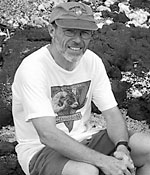 Sad news found me last week when I learned that my previous mentor, Corey Largman, passed away last October. I had the pleasure of working in Corey’s lab for two years as a technician, where I learned a great deal from him. The lab was quite small, and I was able to talk to him on a daily basis. He was a glass-is-half-empty kind of scientist, but personally he was encouraging. He provided me with a great deal of freedom in how I pursued my project (an ambitious one that never reached publication), but pulled in the reins just enough to teach me when I was going in the right direction and when I was fluttering.
I learned equally important lessons from the way he balanced work with everything else. Corey was very strict about how he split his time between work, family, and personal. He spent generous amounts of time with his family—his wife, children, and grandchildren. He was an avid outdoorsman too, taking hiking and kayaking trips with friends each year throughout the western United States. These activities did not detract from his productivity in the lab as he still published more than one-hundred papers, and his passion for science never wavered.
Corey received his Ph.D. in Chemistry at MIT, and he spent the early part of his career studying serine proteases. He later switched fields, and for the remainder of his career investigated the roles of HOX genes in hematopoiesis and myeloid leukemias. He conducted all this work at Veterans Affairs Medical Centers, first in Martinez, CA, and later in San Francisco. He was also a Professor of Medicine at University of California, San Francisco, and had just retired only months prior to his death.
My last day in Corey’s lab, late on a sunny afternoon, he took me out for a drink. We rode our bikes down to the Cliff House, which is perched on a bluff overlooking the Pacific Ocean. There, over cold beers and fried calamari, we talked.
Rest in peace Corey.
RNA Journal Club 5/27/10
Most “Dark Matter” Transcripts Are Associated With Known Genes
Harm van Bakel, Corey Nislow, Benjamin J. Blencowe, Timothy R. Hughes
PLoS Biology, 8 (5): e1000371, 18 May 2010.
doi:10.1371/journal.pbio.1000371
This week’s illuminating summary and analysis by Igor Ulitsky. It’s Igor’s second contribution to the blog:
The paper is one of at least five interesting RNA-Seq papers that came out in the past month or so (see also Guttman et al. and Trapnell et al. in the May issue of Nature Biotechnology, Kim et al. from Nature 465 (7295): 182-7 and De Santa et al. from the same issue of PLoS Biology). All these studies harness the awesome power of Illumina RNA-Seq to look at (mainly) the murine transcriptome and to try to figure out what it consists of, and how what RNA-Seq tells us differs from what we knew previously. Unfortunately, since the reads in those studies are still <75 long, RNA-Seq still can’t tell us exactly what the transcripts in the cell are, but rather what regions of the genome seem to give rise to RNA (or more precisely – which regions of the genome can we uniquely align reads to). This problem is partially alleviated by paired-end RNA-Seq used in the Nature Biotech papers, but it still has limited power for deciphering transcripts expressed at low levels. The five studies mentioned above tell three different stories about the transcriptome – the two Nature Biotech papers talk about how it is possible to identify thousands of novel exons in known genes, and also to give significantly more accurate exonic structures to some of the previously proposed long non-coding RNAs (lincRNAs). Kim et al. and De Santa et al. talk about a surprising amount of RNA coming from enhancer regions in the mouse genome, RNA whose exact function remains a mystery. The study we’re focusing on – van Bakel et al., tackles a more global question – how much of the polyA+ RNA comes from “known genes”, and how much from everything else – the “dark matter”. This question is naturally of high interest, but addressing it involves a wealth of caveats:
- What are “known genes” (i.e., “non-dark matter”) – protein-coding ones? miRNAs? Coding and non-coding ones with known functions?
- What expression levels can be considered functional? Are all transcripts with relatively low expression levels just noise?
- Are short RNA-Seq reads really informative in terms of the number of different RNA species?
- Are we confident enough in the annotation of the genome with pseudogenes and repeats, both of which can contribute to spurious mappings in intergenic regions?
Despite these caveats, van Bakel et al. do a thorough job of at least trying to answer this question, and do their best to convince the readers that, in fact, very little transcription from the mammalian genome is “dark matter”. When analyzing RNA-Seq data, the majority of the genome does not seem to give rise to detectable polyA+ RNA segments. Then how did ENCODE and related studies report as much as 80% of the genome as being transcribed? The authors begin by showing that tiling arrays are prone to give rise to many false positive calls. They do so by comparing their own tiling array data from human and mouse tissues to published and novel RNA-Seq datasets. Unfortunately, the sets are not completely matched (different labs/starting materials), but the data very convincingly shows that for transcripts with low expression data, the signal from tiling arrays is practically the same as the background – a fertile ground for false positive calls. It is interesting to note that the first part of the paper shows in fact that the data that the authors generated themselves (the tiling arrays) is worse than previously published data (RNA-Seq).
From that point on, the authors focus on RNA-Seq data. They find relatively few completely intergenic stand-alone transcripts that are not captured in some way in the “known genes” databases or at least in existing EST/mRNA collections. This is not very surprising given the effort involved in sequencing ESTs in mouse/human – it could hardly be expected that a lot of polyadenylated transcripts would be abundant in RNA-Seq, but missing from those datasets. It should be kept in mind though, that many of what the authors call “known genes” are in fact non-coding transcripts (based on lack of a long/conserved ORF) with completely unclear function. What about the sequence fragments (seqfrags) that do fall outside of the “known genes” boundaries? About 80% of those reads fall within 10kb of known genes and are likely to represent either unannotated parts of those genes, or transcripts whose biogenesis function is related to the gene adjacent to them, as their expression is generally highly correlated with their neighbors. What about the rest? Are there any interesting RNAs out there in the intergenic space? Well, there are some – the authors identify about 11,000-16,000 seqfrags that are located >10kb away from any known gene and that are significantly different from expected. The novel intergenic transcripts tend to overlap regions of open chromatin –identified using DNAse I hypersensitivity – which suggests that at least some of them could be the enhancer-associated transcripts reported in the parallel studies.
The authors then go on to show that by looking at splice junctions derived from the reads (using the popular TopHat tool) they can reach roughly the same conclusion – most of the spliced polyA+ RNA is already “known” to us. They can still identify about 5,000 novel exons in “known genes”, and those share the general characteristics of the known exons, albeit with lower expression and conservation levels. The imminent problem from this section, and from all the other recent RNA-Seq studies is this: Is anyone keeping track of all those new exons? Updating RefSeq/UCSC/Ensembl? How to update these databases is also an excellent question, as short-read-based studies cannot give us a complete (or close to complete) snapshot of the actual transcript. Anyhow, at this pace, we expect to see many additional papers re-discovering the same set of 5,000 novel exons.
The bottom line?
- The outback of the genome rarely gives rise to highly expressed and polyA+ transcripts. This does not mean that there is shortage of putative lincRNAs – hundreds of them are already in the “known genes” set, and others may be functional despite low expression levels/proximity to known genes. The jury is still out on the polyA-transcriptome.
- Annotation of the “canonical genes” in the mouse/human genomes is still not complete and both can be complemented with several thousand additional exons. Let’s hope somebody is keeping track.
- Many intergenic RNAs are likely to be enhancer-associated (but we still don’t understand why).
This paper (as well as the other recent RNA-Seq studies) was definitely interesting to read, and we can only look forward to what we will learn once long-read RNA-Seq (e.g., Pacific Biosciences) kicks in.
Citation for researchblogging.org:
van Bakel H, Nislow C, Blencowe BJ, & Hughes TR (2010). Most “dark matter” transcripts are associated with known genes. PLoS biology, 8 (5) PMID: 20502517
Vienna small RNA conference + central European vacation

Outside the IMBA (site of conference)
In a black+tinted Audi A8, briskly driven toward our plush hotel in central Vienna by a sharp looking Austrian, my trip began. These Europeans, they live properly. My 007-like arrival, however, soon gave way to an intense urge to sleep. But before I hit dreamland, with my friend I managed a trek up the tower of the ~14th century Gothic cathedral Stephansdom. Our reward later was a full meal, and cold lagers. Deep sleep was now imminent, and would do me well until next morning: the start of the 5th Microsymposium on small RNAs. It was a damn fine conference.

MicroScientists working at IMBA
After attending two consecutive Keystone RNAi conferences (2008-2009), it was so refreshing to be at a meeting where I didn’t feel so anonymous. Due to the smaller size, and perhaps partly the fact that half my lab wasn’t there (thank god!), there were numerous opportunities to meet other students, postdocs, and PIs. The conference hosts were friendly, and the meals were very good. The meeting ran smoothly. For entertainment, the second night there was a great Brazilian drums-guitar duo that provided pleasant rhythms. And good times were had by all out at the bars. They don’t close at 2am in Europe. You can stay as loooonnggg as you want.

Auditorium at IMBA
The big-shots Narry Kim, Phil Zamore, Dinshaw Patel, and Olivier Voinnet all gave very nice talks. These, along a talk by fast rising Yuki Tomari, were the highlights for me. But the talks by numerous junior group leaders are what really set the tone for the meeting. Young blood ruled here. Nine talks by Ph.D. students further cemented this feeling. (I was fortunate to give one of them.) By contrast, now I recall Keystone speakers as comparatively geriatric.
In terms of topics, animals, plants, yeast, and bacteria were all discussed. Along with a panoply of methods, from deep sequencing to whole animal, all the bases (pun intended!) were covered. Applause for Javier Martinez especially, as well as Julius Brennecke, for constructing such a great program. Overall, in terms of the science, food, schmoozing, and boozing–the 4 cornerstones of a meeting–Vienna hit a home run.
After the conference, my beer-laden hops (pun intended!) up to Prague and then Munich nicely rounded out my central European vacation. Below are some photos from my digital. I actually shoot primarily with a 35mm camera, and have many nice photographs from this trip on film, many of which will end up eventually here.
And now my awards for the cities of Vienna, Prague, and Munich:
- Best Science: Vienna (no contest!)
- Best Beer: Prague (for god sakes man, it was cheaper than bottled water, and soooo delicious.)
- Most Beautiful City: Prague
- Most Beautiful Women: Vienna
- Best Museums: Both in Munich, the splendid Brandhorst (modern art), and, vroom-vroom, the BMW museum!
Pictures from Prague, and the BMW Museum in Munich:

Prague
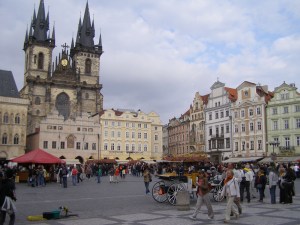
Týn Church and Old Town Square, Prague

St. Vitus Cathedral, Prague Castle

BMW R 32 motorcycle (1923-1926)

BMW 502 3,2 Liter Super (1957-1961) wheel, reflecting me and a 3.3 Li (1975-1977)

Sexy engine detail, 1997 BMW S50 B32.
RNA JC posts shuffle
The RNA JC posts for the past month aren’t in chronological order right now. I’m reposting them to the top of the queue when I get summary and analysis to add, rather than burying them down chronologically where you might miss them, a practice I’ll adhere to from now on.
Please enjoy the three most recent write-ups by Pavan and Vikram (below), and Igor (above). They presented three high-impact papers that should be of great interest to you. Kudos to the presenters for setting aside time in their busy schedules to do write-ups.
RNA Journal Club 5/6/10
A dicer-independent miRNA biogenesis pathway that requires Ago catalysis
Sihem Cheloufi, Camila O. Dos Santos, Mark M. W. Chong & Gregory J. Hannon
Nature, 465: 584–589, 3 June 2010.
Nature AOP, 27 April 2010.
doi:10.1038/nature09092
This week’s summary and ruminative analysis by Vikram Agarwal. It’s Vikram’s second contribution to the blog:
In this article, Cheloufi and colleagues demonstrate an alternative biogenesis pathway for the maturation of a microRNA. A key question that this study seeks to address is why a member of the Argonaute family of proteins has retained its catalytic activity throughout millions of years of mammalian evolution. Though a handful of examples are known of miRNA-mediated cleavage events in animals, none have been shown to be crucial for target gene regulation and cell viability. The evidence thus suggests the possibility that the catalytically active residues of Argonaute have been conserved for purposes that are distinct from target cleavage.
The authors initially explore the consequences of losing catalytic activity of Argonaute during early mouse embryogenesis. They find that Ago2 is expressed ubiquitously in the early mouse embryo and in nearby placental tissues. Mice with a mutated catalytic residue of Ago2 develop normally through embryogenesis, but exhibit an anemic phenotype and die shortly after birth. Further cell sorting experiments confirm a problem in the maturation of erythrocytes, leading to an accumulation of pro-erythroblasts prior to birth.
During a check of global miRNA expression patterns in wild type and mutant mice, the authors discover that a single miRNA, miR-451, is aberrantly expressed in catalytically deficient mice. This miRNA is already known to have important roles in erythrocyte differentiation. More interestingly, small RNAs mapping to its precursor do not correspond to a canonical pattern one would expect if the miRNA were processed by Dicer. The precursor lacks a detectable miR* fragment, and the 3′ end of the mature miRNA is derived from the loop of the hairpin rather than the stem. The processing of the precursor is biochemically shown to be Drosha, but not Dicer, dependent, when compared to canonical miRNAs such as miR-294 and miR-16. The concluding experiments of the work investigate the role of Argonaute in the processing of pre-miR-451. In vitro purified Ago2 is demonstrated to be sufficient to produce a mature miR-451 cut, although the cleavage product is nearly 8-10 bases longer than expected. Detection of shorter products in in vivo samples, along with untemplated U addition in the 3′ end, implicate the role of an unknown exonuclease in the ultimate maturation of miR-451 into its shorter, functional form.
Overall, the biochemical evidence presented in this study is compelling, and strongly supports a model in which the Piwi domain of Ago2 catalytically cleaves miR-451. A conclusion that is less clear, though presented as an underlying motivation for the study, is that this non-canonical processing pathway explains the retention of Ago2 catalytic activity. An experiment that would provide support to this hypothesis would be to see whether a miR-451 knock-out recapitulates a similar phenotype as a catalytically-deficient Ago2 mutant. At present, it is possible that the target cleavage ability of Argonaute, or a yet unknown mechanism requiring its catalytic potential, could explain the evolutionary pressure for its conservation. Intuitively, it is difficult to comprehend why this non-canonical pathway has been conserved for only a single miRNA out of the hundreds encoded in the genome. The time spans involved during the evolution of the precursor are so vast that there must have been at least some opportunity for small insertions to have converted the miRNA into one that is processed canonically, or produced a novel miRNA convergently with the same seed sequence. Only further work will help elucidate why such strong evolutionary pressure exists to preserve this non-canonical processing mechanism.
Citation for researchblogging.org:
Cheloufi S, Dos Santos CO, Chong MM, & Hannon GJ (2010). A dicer-independent miRNA biogenesis pathway that requires Ago catalysis. Nature PMID: 20424607
RNA Journal Club 6/3/10
Epigenetic silencing of tumour suppressor gene p15 by its antisense RNA
Wenqiang Yu, David Gius, Patrick Onyango, Kristi Muldoon-Jacobs, Judith Karp, Andrew P. Feinberg & Hengmi Cui
Nature 451: 202-206, 10 January 2008.
doi:10.1038/nature06468
RNA Journal Club 5/13/10
Cooperation Between Translating Ribosomes and RNA Polymerase in Transcription Elongation
Sergey Proshkin, A. Rachid Rahmouni, Alexander Mironov, Evgeny Nudler
Science, Vol. 328. no. 5977: pp. 504 – 508, 23 April 2010.
DOI: 10.1126/science.1184939
This week’s smart summary and analysis by Pavan Vaidyanathan:
In this paper, the authors propose a mechanism for active physical cooperation between an elongating RNA polymerase (RNAP) and a translating ribosome following the polymerase on the transcribed message.
It has been known for several decades that in prokaryotes the processes of transcription and translation are coupled and occur simultaneously. Ribosomes are loaded on to a message as it is getting transcribed by RNAP. This coupled process serves to maximize efficiency of protein synthesis and allows for rapid changes in gene expression. It is also well established that the coupling of translation to transcription can serve as a means of regulation of RNAP. For instance, if the rate of translation is not as high as the rate of transcription, the increasing distance between the ribosome and RNAP allows for the transcription terminator Rho to bind the message and cause RNAP dissociation from the message. Additionally, numerous amino acid biosynthesis operons are regulated by the mechanism of transcription attenuation in which the rate of translation determines the formation of secondary structure behind RNAP that either allows the continuation of transcription or terminates transcription. In this paper however, the authors propose a novel means of regulation of transcription that depends on a physical interaction between RNAP and the first trailing ribosome behind the polymerase.
The authors first showed that in vivo, the ratio of the rate of transcription (nt/sec) to the rate of translation (aa/sec) is consistently ~3.0 in a variety of environmental conditions and stages of growth. Based on this observation, the authors hypothesize that the rate of transcription in vivo is determined by the rate of translation. To test this, they determined the rate of transcription of a plasmid-derived lacZ message in cells grown in media containing low concentrations of ribosome-binding antibiotic (chloramphenicol). They observed that slowing down the ribosome also slowed down the rate of transcription. They confirmed this by testing the rate of transcription of various messages harboring increasing amounts of rare codons, which are expected to slow down translation. As expected, the rate of transcription was inversely proportional to the percentage of rare codons in the message.
RNAP, like other polymerases, is known to backtrack on a message quite frequently. However, the presence of multiple polymerases on the same message significantly decreased backtracking. The authors hypothesized that the ribosome could improve the efficiency of transcription by serving as a physical block to backtracking and ‘forcing’ the polymerase to go forward. In order to test their model, the authors developed an assay to monitor RNAP backtracking in vivo. The assay employed the single-stranded DNA binding probe, chloroacetaldehyde, to monitor the migration of the transcription bubble. They observed that when a single RNAP molecule was forced to encounter a roadblock (lac repressor bound to DNA), it paused and backtracked. However, when there were two RNAP elongation complexes transcribing the same message, this backtracking was reduced substantially. Similarly, the presence of a ribosome behind RNAP also significantly reduced the incidence of backtracking suggesting that the ribosome could improve transcription by preventing backtracking of the leading elongation complex (EC). Using a similar roadblock system, the authors additionally showed by Northern blot analysis of the transcribed mRNA that the leading EC could had much higher rates of readthrough of the roadblock when it was followed by a second EC or by a ribosome.
The authors conclude that the ribosome directly controls the rate of transcription by preventing RNAP backtracking. Because of this cooperation, the rate of transcription is determined by codon usage and nutrient availability as sensed by the ribosome thus allowing precise regulatory adjustment of transcription to translational needs.
Citation for researchblogging.org:
Proshkin S, Rahmouni AR, Mironov A, & Nudler E (2010). Cooperation between translating ribosomes and RNA polymerase in transcription elongation. Science, 328 (5977), 504-8 PMID: 20413502
The allure of Vienna, and regulatory RNAs
I will soon share my thoughts on the Vienna small RNA conference, once I’m comfortably home in my lab computer chair, custom ass-groves and all, but the short of it is “most-excellent.”
In the meantime, hop on over to the “MolBio Research Highlights” blog, run by my blogging compadre Alejandro Montenegro-Montero, to read a guest post I was selected to write, “The allure of regulatory RNAs.” For most readers of this blog, my reasons could sound obvious, but I’m curious to know what you think. So chime in over there, or here, if you wish. At the very least, CLICK THAT LINK.
Now back to more pertinent business: drinking Budvar 12 degree. I’m in Prague right now.
RNA Journal Club 5/20/10
DNA Methylation Mediated by a MicroRNA Pathway
Liang Wu, Huanyu Zhou, Qingqing Zhang, Jianguang Zhang, Fangrui Ni, Chang Liu, and Yijun Qi
Molecular Cell, Volume 38: 465-475, 08 April 2010.
doi: 10.1016/j.molcel.2010.03.008
An American Scientist in Vienna
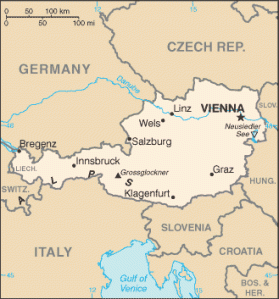 Time to break out the shorts and Ray-Bans! I’m going to Europe. Well actually, I’m going to Vienna–which is looking extremely lovely–to attend the 5th Microsymposium on Small RNAs, to be held at the IMBA May 17-19. (Don’t worry, I’m not bringing the shorts, and have never owned Ray-Bans or an American-abroad-arrogance.)
This place and this conference are right up my alley. It’s gonna be hella sophisticated. Scarfing down topfenkolatsche and Ottakringer while chatting up the impressive speakers/attendees, that is the goal. How do scientists schmooze in Europe? Probably with better food and more cigarettes. And ohhh, the bier... you’re the other reason I’m coming.
Never having been to Europe before, my lab mate remarked, “you’re going to lose your European virginity!” Well damn, it’s about time.
Stories and photos forthcoming.
Please direct questions to my projected computer screen…
Wh at?! Now the US military is wasting as much time as we do on Powerpoint? Man, Joe. Q. Taxpayer could sure hit the Microsofties responsible for peddling this necessary evil in the nuts right now. Powerpoint has been used to cover up many a shitty talk!
Keep your presentations short and sweet. Limited free passes for unnecessary images can only be given for humor, that is IF you’ve got the funny credentials. Otherwise leave these to the experts. 🙂

 You'd Prefer An Argonaute
leave a comment