Scott Valastyan teaches the AACR about microRNAs
UPDATE APRIL 2015: The work originally referred to in this post has been retracted. Please read more here.
RNA Journal Club 4/22/10
Transcriptome-wide Identification of RNA-Binding Protein and MicroRNA Target Sites by PAR-CLIP
Markus Hafner, Markus Landthaler, Lukas Burger, Mohsen Khorshid, Jean Hausser, Philipp Berninger, Andrea Rothballer, Manuel Ascano, Jr., Anna-Carina Jungkamp, Mathias Munschauer, Alexander Ulrich, Greg S. Wardle, Scott Dewell, Mihaela Zavolan, and Thomas Tuschl
Cell 141, 129–141, 2 April 2010.
DOI: 10.1016/j.cell.2010.03.009
RNA Journal Club 4/15/10
A Splicing-Independent Function of SF2/ASF in MicroRNA Processing
Han Wu, Shuying Sun, Kang Tu, Yuan Gao, Bin Xie, Adrian R. Krainer, and Jun Zhu
Molecular Cell 38: 67–77, 9 April 2010.
DOI: 10.1016/j.molcel.2010.02.021
OH NOES
Re-posted from Hydrocalypse Industries (from, like, a year ago):

Reminds me of a friend in college who spent his adolescence in Scottsdale, Arizona and said that in the summers there it got so hot he could feel his proteins unfolding.
RNA Journal Club 4/8/10
Differential regulation of microRNA stability
Sophie Bail, Mavis Swerdel, Hudan Liu, Xinfu Jiao, Loyal A. Goff, Ronald P. Hart and Megerditch Kiledjian
RNA, Advance Online Article, 26 March 2010.
doi: 10.1261/rna.1851510
Liquid and intellectual refreshment in S. Brenner
Laboratory biological science hasn’t changed much in the last 40 years:
What, the reader may ask, did we do in the 6 years between starting C. elegans genetics and publishing the first article on it? Since the animal has a short life cycle of 3.5 days, it should not have taken all that much time just to complement and map the mutations. Many visitors who came to the MRC Lab in Cambridge thought that we spent far too much time eating, drinking, and talking. Observing us only during normal working hours, you could see their point. If one arrived at the lab at the reasonable hour of 10 am, there was just time to open one’s mail before adjourning to the canteen for morning coffee, usually prolonged by a very interesting discussion on some aspect of science. This did not leave much time before lunch, which naturally was also accompanied by discussion that was terminated only by rushing off to attend an afternoon seminar on the Bohr effect in hemoglobin or the like. That brought one to afternoon tea and after that there was hardly enough time to start anything in the lab before adjourning to the pub for liquid and intellectual refreshment. It was only after dinner that the real work started and the lab then filled up with the owls. Even these bouts of work had to be interrupted, of course, for midnight coffee and more discussions.
Sydney Brenner, from In the Beginning Was the Worm . . .



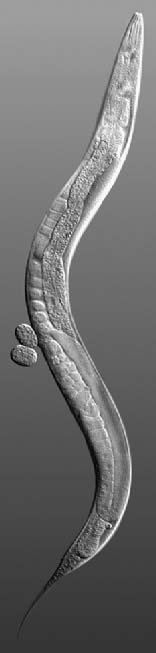
RNA Journal Club 4/1/10
Caspase-Dependent Conversion of Dicer Ribonuclease into a Death-Promoting Deoxyribonuclease
Akihisa Nakagawa, Yong Shi, Eriko Kage-Nakadai, Shohei Mitani, Ding Xue
Science Express, 11 March 2010.
doi: 10.1126/science.1182374
This week’s methodische summary and analysis–impressively her third contribution to this blog–by Anna Drinnenberg:
In this paper Nakagawa and colleagues describe a new role for Dicer (DCR-1) in the apoptotic pathway of C. elegans. Briefly, the apoptotic pathway can be triggered by many different cellular stimuli, resulting in caspase activation and subsequent fragmentation of nuclear DNA. DNA fragmentation can be separated into two steps: (i) During the first phase a caspase-activated DNA endonuclease catalyzes formation of DNA nicks and breaks (ii) In mammals Caspase 3 activates the Caspase-activated deoxyribonuclease CAD generating 3’ hydroxylated (3’ OH) DNA breaks that can be detected by the TUNEL (TdT-mediated dUTP nick end Labeling) assay. Other endonucleases including EndoG, which translocates from the mitochondria to the nucleus, function at later stages to complete degradation of genomic DNA. Mutants of one or combinations of those endonucleases result in the accumulation of TUNEL-stained nuclei because the resolution of 3’ OH DNA breaks is impaired.
C. elegans has homologues of Caspase3 (CED-3) and EndoG (CPS-6), as well as other endonucleases involved in the second stage of DNA fragmentation, however, a homologue of CAD had not been found in the C. elegans genome. This group therefore aimed to identify the endonuclease that catalyzes the initial formation of 3’ hydroxylated DNA breaks. They performed an RNAi screen in the cps-6 deletion background and selected mutants that showed a decrease in TUNEL signal. DCR-1, a protein so far only known to be involved in RNAi pathways of C. elegans and other species was one hit from the screen.
They further confirmed the TUNEL results using DCR-1 deletion alleles, indicating that DCR-1 acts upstream of CPS-6 and other endonucleases. Moreover, they showed that DCR-1 has pro-apoptotic activity by counting the number of cell corpses during C. elegans embryogenesis in wild-type and dcr-1 deletion strains. Deletion strains of other factors involved in the C. elegans RNAi pathway did not show the same phenotypes indicating that the pro-apoptotic function of DCR-1 is independent of its role in the RNAi pathway. Furthermore, they found that DCR-1 is processed by CED-3, which cleaves its first RNAseIII domain. They named the c-terminal part of truncated form of DCR-1, “tDCR-1”, which lacks most of the full-length protein domains including the Helicase, the PAZ, and even one of the RNaseIII domains.
Studies in vitro incubating tDCR-1 with dsRNA or plasmid DNA showed loss of RNase activity, but a gain of DNase activity. The DNase activity of tDCR-1 appears to be weak, resulting in just a single cut of plasmid DNA instead of complete fragmentation. This would be consistent with a role for tDCR-1 in generating 3’OH DNA nicks, whereas completion of DNA fragmentation is carried out by other endonucleases like CPS-6. It would be therefore interesting to compare the enzymatic activity of tDCR-1 to CAD in the same in vitro assay. They also did some very interesting experiments that convincingly tied the function of the different forms of DCR-1 to either being involved in the apoptotic pathway or the RNAi pathway. For example, they rescued the mutant RNAi phenotype, but not the mutant apoptosis phenotype, of dcr-1 deletion animals by expression of an allele of DCR-1 resistant to CED-3 cleavage. In a complementary experiment, expression of tDCR-1 in the dcr-1 deletion background resulted in rescue of the apoptotic pathway but not the RNAi pathway. Finally, they showed the same acidic amino acids are important for both RNase and DNase activity, demonstrating the similarity of both enzymatic activities.
Nakagawa and collegues performed a very comprehensive study characterizing the role of DCR-1 acting as a functional analog of CAD, indicating that a conserved, caspase-mediated mechanism activates the apoptotic DNA degradation process in both C. elegans and mammals. Further studies could include visualizing the relative abundance of tDCR-1 versus full-length DCR-1 in the nucleus and the cytoplasm. Moreover, studies in other organisms, including those that have a homolog of CAD, could determine if the pro-apoptotic role of DCR-1 is specific to C. elegans or is conserved in other species as well. In conclusion, this study shows the participation of the same protein in two different unrelated pathways, an economical use of the genetic repertoire.
Citation for researchblogging.org:
Nakagawa A, Shi Y, Kage-Nakadai E, Mitani S, & Xue D (2010). Caspase-Dependent Conversion of Dicer Ribonuclease into a Death-Promoting Deoxyribonuclease. Science PMID: 20223951
Oprah and Komodos

I’m easily excited by shows on television about animals–wild ones, of the non-human variety. Programs like “Nature” and “Nova” on PBS are all-time favorites. I was blown away by the HD nature series “Planet Earth” that aired on Discovery Channel a few years ago (co-produced by the BBC and Discovery Channel). “Planet Earth” featured beautiful, groundbreaking video of diverse habitats across the planet. The producers of “Planet Earth” recently unveiled a new nature series, titled “Life,” that premiered last Sunday evening on Discovery Channel, and should be running for several weeks. Highly similar in style to “Planet Earth”, “Life” features stunning videography, crisp editing, and gripping stories to satisfy bio-whores like myself. I highly recommend it, just as long as you don’t mind being lectured on biology by Oprah Winfrey.
For the American version of “Planet Earth”, the producers struck gold with narration–the exceedingly composed, yet just-so tense, buttery smooth voice of Sigourney Weaver. But in the two chapters of “Life” I watched last Sunday, I felt like I was being read a children’s book. Oprah’s voice is too cherubic to convey the severity of, for example, a pack of Komodo dragons devouring a Water Buffalo to the bone in four hours. Don’t ruin this for me Discovery Channel.
The background music was also often unnecessarily over-dramatic, at times sounding like pieces mainstream movies use during transition scenes where time and character emotions quickly evolve in schmaltzy ways. This window dressing is clearly there to impress those who are not already impressed. I guess I appreciate the effort.
The content of “Life,” though, is superb. Life itself is distilled into three central tenets: eat, avoid being eaten, and reproduce. To demonstrate these principles, stories are drawn from many different animals (mammals, reptiles, fish, insects, etc.), and even plants (Venus Flytrap). For example, in introducing reproductive methods of the male stalk-eyed fly, Oprah mentions the “urge to breed”, and that males often have to “earn the right”. For a premature stalk-eyed male fly to become a heavily endowed, mature one, they climb to the top of a plant and then pump up their translucent eye stalks with air bubbles that they engulf, causing their eyes at the ends of the stalks to grow out away from their bodies. The most well-endowed males may then convene to fight, winner gets the female.
Sardines were highlighted for a technique they use to avoid being eaten by swordfish–swimming together in a large school, wholly changing direction rapidly, like a “single organism”, making it harder to pick out individuals.
For an example of the need to eat, the show reprised a wonderful story that was also in the Planet Earth series, the most human-like, showing clever monkeys from central Brazil that use rock tools to crack open nuts they rely on for food. Younger monkeys imitate their elders, unsuccessfully, for up to eight years before they perfect nut cracking.
The segment from last Sunday that dropped my jaw the farthest concerned a hungry Komodo dragon. (Hmm… great name for a heavy metal band.) On an island in Indonesia, the only region in the world these huge lizards are found, it’s dry season. Food’s at a premium. This is no time to be anywhere near a Komodo dragon. The cameramen happen upon a sole Water Buffalo lazily sauntering around an evaporating watering hole. A nearby Komodo seizes its opportunity. At first, the Water Buffalo mostly ignores the lizard, seeing only a nuisance. The Buffalo outsizes the Komodo as an adult human a house cat. But the Komodo needs just one, venomous bite to begin meal preparation. The dragon waits for the perfect moment to sink its teeth into the Buffalo’s leg, wary to avoid a powerful kick that could break it’s jaw or kill it. Once successful, the venom begins to set in very slowly. The Komodo is “focused” and “relentless.” It follows the weakening Buffalo everywhere, continually harassing it. Soon other Komodos follow suit, realizing an imminent meal. The Buffalo lacks sufficient food and water, and its wounds fester. After three weeks, the Buffalo succumbs. Within four hours it’s museum ready, skeletonized. That’s life.

RNA Journal Club 3/25/10
Rahul N. Kanadia and Constance L. Cepko
Genes & Development 24 (3): 229-234, 1 February 2010.
doi: 10.1101/gad.1847110
Keystone, Green Edition
Look to the plant. Look at ’em; eat ’em; use ’em for medication; and appreciate them because they offer numerous biological fruits, including well studied RNAi. Here are some things overheard at this year’s RNA Silencing Mechanisms in Plants Keystone Symposium, which met in Santa Fe late last month. (Thanks a bunch to my friend M. for helping with this.)
A couple heavy-hitters described a class of predominantly 22 nt miRNAs in Arabidopsis, Dcr-like 1 products, that initiate secondary siRNA biogenesis by an unknown mechanism. This has also been seen in rice, where they are also Dcr-like 4 dependent. They key point is that specific miRNAs only appear to be able to initiate secondary siRNA biogenesis if they are 22 nt, and not 21 nt. (Most miRNAs in Arabidopsis are 21 nt.) The implication is that Argonaute can decipher a 1 nt difference in length of a miRNA, and this may induce some structural change that could, for example, lead to recruitment of RdRP and other factors responsible for producing secondary siRNAs. Pretty fascinating that such a minute difference could be responsible for such critical decision making.
Another speaker presented work showing some elegant, and very technically challenging, grafting experiments in Arabidopsis that show 24 nt siRNAs can move through tissues, and cause RNA induced DNA methylation. [Hearing this caused me flashbacks to my first-year grad Development course in which we learned about pioneering grafting experiments in newts in the early part of last century, and how crazy it is that these Franksteinian techniques work so well.] Using a different technique, particle bombardment, another speaker demonstrated spreading of siRNAs through cells. Very fascinating to think of how spreading is regulated/controlled to remain specific. They’d be potent little things to be sending out without exact destinations/address labels.
Although it is worth pointing out that 24 nt siRNAs repress transposons and repeat elements, so it may not be so bad to have this activity be somewhat constituitive in a given region when such a challenge is detected. When silencing components were removed, transposition was observed to grow slowly. When silencing components were re-introduced, it took several generations to re-establish silencing, in reproductive tissues.
One of the above speakers also described experiments mating tomatoes. [I love tomatoes myself, and, did you see The Simpsons episode where Homer see’s Ralph Wiggum’s alcohol powered car at the Springfield Elementary science fair? “One for you; one for me” Homer says, as he dreams sipping half of his fuel purchase. That would be me if I was mating tomatoes in lab.] What was really cool is that after a few generations they saw the emergence of new siRNAs that were neither present in the parental nor F1. These progeny with novel siRNAs expressed new traits as well. Maybe I’m overinterpreting the result, but, wow! It’s unlikely perhaps, but the traits could be solely due to the fresh siRNAs. Or more interestingly, could evolution be dictating some sort of package deal for the emergence of new traits? “I’ll give you a new trait, but you’ve gotta take small RNA(s) along with it.” Or maybe it’s simply coincidence–you mate two non-isogenic things, and all kinds of stuff comes out.
Also mentioned was a new set of 24 nt miRNAs in rice, Dcr-like 3 dependent, present in reproductive organs, that direct methylation of their target genes in trans, in a strand specific manner. Yeah, but what kind of rice? Was it brown basmati?
Finally, comparing two different Arabidopsis strains, one Columbia (from Missouri) and one from the Cape Verde islands, a speaker described that they produced vastly different genome-wide Cytosine methylation patterns. Promoter methylation appeared to be conserved while gene body methylation was greatly reduced in the Cape Verde Island strain. Presumably this has some significant functional consequence, perhaps due to the differential environmental responses that the two strains have evolved.
I wish I was in Cape Verde right now, on the beach, eating a salad.
RNA Journal Club 3/18/10
Mammalian cell penetration, siRNA transfection, and DNA transfection by supercharged proteins
Brian R. McNaughton, James J. Cronican, David B. Thompson and David R. Liu
PNAS 106 (15): 6111-6116, 14 April 2009.
doi: 10.1073/pnas.0807883106
This week’s shrewd summary/analysis–impressively his third contribution to this blog–by David Weinberg:
In their 2009 PNAS paper, David Liu and colleagues demonstrate that a green fluorescent protein (GFP) variant that has been engineered to have a positively charged surface can penetrate mammalian cells and also chaperone nucleic acids into those same cells. The story began in 2007 when Liu’s lab published their initial characterization of so-called “supercharged” proteins. The motivation was to determine how changing the net charge of a protein can affect its stability. To do this, they began with an extra-stable GFP and changed as many surface-exposed residues as possible to positively charged residues (i.e., lysine and arginine). This resulted in a GFP variant with a net charge of +36 (herein referred to as +GFP) that folded and fluoresced similarly to the original GFP. Amazingly, however, +GFP was highly resistant to aggregation: boiling of the protein eliminated activity, but cooling the boiled protein restored most of the activity. This stabilizing effect of supercharging was not unique to GFP, as similarly supercharged variants of GST (a dimer) and streptavidin (a tetramer) showed similar properties.
So what does all of this have to do with RNA? In 2007, Liu’s lab also noted that +GFP could use its positively charge surface as “molecular Velcro” that can reversibly bind to RNA (tRNA) or DNA (plasmid dsDNA). Of course, +GFP-bound RNA is useless (to a first approximation) in a test tube. Where the PNAS paper begins is with the hypothesis that +GFP might be able to enter cells and thereby escort its bound nucleic acid cargo into the cell as well. The authors begin by conclusively showing that +GFP penetrate a variety of mammalian cells with an efficiency that varies with its charge. To satisfy the cell biologists in the audience, they provide an initial dissection of the mechanism of +GFP uptake using a variety of (mostly chemical) perturbations. From this, they conclude that the mechanism involves energy-dependent endocytosis that is dependent on actin polymerization and sulfated (positively charged) cell surface peptidoglycans but does not require caveolin or clathrin. Now focusing back on RNA, the authors demonstrate that +GFP can bind to siRNAs in vitro – not surprising given their previously published data showing that it can bind to tRNA. Moreover, +GFP-bound Cy3-labeled siRNAs can enter HeLa cells – their FACS data suggest that virtually all cells in the population take up the siRNAs to a similar degree, yielding a quite homogenous population of “transfected” cells. Although Lipofectamine (a standard transfection reagent) can also deliver Cy3-siRNA to HeLa cells, +GFP delivers ~100-fold more siRNA based on fluorescence. More impressively, in 4 other cell lines that are virtually resistant to Lipofectamine-mediated transfection, +GFP delivers huge amounts of Cy3-siRNA without any significant cytotoxicity. Not only do these siRNAs enter the cell, but they can interact with the RNA interference machinery and mediate gene silencing. Further characterization of +GFP-siRNA complexes reveals that +GFP enhances the stability of siRNA in serum and the protein is itself relatively stable in serum. Although less impressive in its efficiency, +GFP (with an HA tag) can also be used to transfect plasmid DNA that gets expressed in the nucleus.
The authors conclude that +GFP may provide an attractive alternative to nucleic acid delivery. Because it uses a general pathway (endocytosis) for delivery, it should in theory work in all cell types. In addition, it is relatively easy to use since it only requires mixing of recombinant +GFP (which can be readily made in E. coli) and the nucleic acid of interest, and adding this to cells. But beyond this immediate application as a transfection reagent, it seems that +GFP and supercharged proteins more generally may become a useful tool for all sorts of biology (which I have no doubt the Liu lab is already exploring).
Citation for researchblogging.org:
McNaughton BR, Cronican JJ, Thompson DB, & Liu DR (2009). Mammalian cell penetration, siRNA transfection, and DNA transfection by supercharged proteins. Proceedings of the National Academy of Sciences of the United States of America, 106 (15), 6111-6 PMID: 19307578
Happy Birthday!
Today You’d Prefer An Argonaute turns one year old! If you ask me, it’s still as cute as the day it was born. And it’s had an exciting year, with now 93 posts, close to a couple dozen comments, and more than ten-thousand and eight-hundred views.
I’m having a blast rearing YPAA, and a massive chunk of credit must go to these other outstanding nurturers (in chronological order): Anna  Drinnenberg (twice), Joel Neilson, David Weinberg (twice), Anonymous 1, Michael Nodine (twice), Robin Friedman (twice), Noah Spies, Graeme Doran, Anonymous 2, Anonymous 3, Vikram Agarwal, Jenny Rood, Igor Ulitsky, and Mohini Jangi. (Thanks also to Margaret for running the MIT RNA Journal Club, YPAA’s baby food.) They’ve help raise this blog to be what I’d dreamt of a year ago–a community effort to highlight and analyze new work in RNA biology. It would be pretty Dubya-ish of me to go ahead and declare “Mission Accomplished,” so I’ll make sure YPAA keeps growing for a while.
If there’s anything you’d like to see on YPAA, or you have suggestions for improvements, just fire through a comment below. If you’re interested in contributing, I’m interested in you contributing (see “How to contribute to YPAA” page in column to the right).
Now back to the birthday celebration–turns out YPAA shares its birthday with other notable folk: an American president, and a couple sex bombs. Fate, I suppose.
FAMOUS WITH MARCH 15 BIRTHDAYS:

Andrew Jackson

Fabio

Eva Longoria

You'd Prefer An Argonaute
Give YPAA a birthday present by voting below!
RNA Journal Club 3/11/10
Dicer-Independent Primal RNAs Trigger RNAi and Heterochromatin Formation
Mario Halic and Danesh Moazed
Cell 140 (4): 504-516, 19 February 2010.
doi: 10.1016/j.cell.2010.01.019

 You'd Prefer An Argonaute
leave a comment