2010 in review
The stats helper monkeys at WordPress.com mulled over how this blog did in 2010, and here’s a high level summary of its overall blog health:

The Blog-Health-o-Meter™ reads Fresher than ever.
Crunchy numbers

A Boeing 747-400 passenger jet can hold 416 passengers. This blog was viewed about 13,000 times in 2010. That’s about 31 full 747s.
In 2010, there were 80 new posts, growing the total archive of this blog to 154 posts. There were 69 pictures uploaded, taking up a total of 51mb. That’s about a picture per week.
The busiest day of the year was January 7th with 144 views. The most popular post that day was Venki Ramakrishnan: the Cadillac of ribosome structure investigators.
Where did they come from?
The top referring sites in 2010 were nature.com, researchblogging.org, Google Reader, facebook.com, and blogs.nature.com.
Some visitors came searching, mostly for cadillac, argonaute, fabio, scott valastyan, and harry noller.
Attractions in 2010
These are the posts and pages that got the most views in 2010.
Venki Ramakrishnan: the Cadillac of ribosome structure investigators October 2009
2 comments
About me and my contributors March 2009
Harry Noller got shafted by the 2009 Nobel Prize in Chemistry October 2009
1 comment
Scott Valastyan teaches Bob Weinberg about microRNAs June 2009
1 comment
The History of the Argonaute, Part 1 June 2009
YPAA’s notes:
The above was automatically prepared by WordPress and emailed to me; pretty nifty it is.
Visitors that arrived through Google searches did come in droves for Cadillac pictures (see above–isn’t she a beaut?), as I noted in an earlier post, and some for Fabio pictures (not to mention Eva Longoria pictures).
I’ll note, however, that the vast majority of Google searches that link to this blog are for more predictable strings (almost always abbreviated/shorthand, and so rarely recur), e.g. on January 5th people searched for “argonaute piwi protein family” and “youd prefer an argo” and then landed here. One thing I have learned blogging is that Google can be a strange beast–at great frequency it gives you the content you want regardless of context, so if you have random pictures on your webpage largely irrelevant to any other content there, like I do occasionally, Google still sends ’em in and then it obviously becomes a reinforcing cycle.
And the Top 5 posts in 2010 were all written in 2009?! Hey, they’re oldies but goodies.
Let’s fill more than 31 747’s in ’11!!!
RNA Journal Club 1/6/11
Transcription of functionally related constitutive genes is not coordinated
Saumil J Gandhi, Daniel Zenklusen, Timothée Lionnet & Robert H Singer
Nature Structural & Molecular Biology, Volume 18, 27–34, January 2011.
doi:10.1038/nsmb.1934
You have a nice figure…
… Michel et al., the paper on Science Express today that mined Google Books to draw trends of word use in the English language over the last 200 years, from published books.

There’s no data post-2000, but cell and micro-biology are clearly declining in the genome era, where lazy computational biologists eat pizza and ice cream all day.
But why didn’t they plot “RNA”? It’s got to register at least as good as sushi did.
RNA Journal Club 12/16/10
Fatih Ozsolak, Philipp Kapranov, Sylvain Foissac, Sang Woo Kim, Elane Fishilevich, A. Paula Monaghan, Bino John, and Patrice M. Milos
Cell 143, 1018–1029, 10 December 2010.
DOI 10.1016/j.cell.2010.11.020
RNA Journal Club 12/9/10
Poly(A) Tail Recognition by a Viral RNA Element Through Assembly of a Triple Helix
Rachel M. Mitton-Fry, Suzanne J. DeGregorio, Jimin Wang, Thomas A. Steitz and Joan A. Steitz
Science Vol. 330, no. 6008, pp. 1244-1247, 26 November 2010.
DOI: 10.1126/science.1195858
This week’s to the point summary and analysis by Alex Robertson:
In this paper the authors report the first known endogenous example of a U rich loop capturing and protecting a poly(A) tail sequence. Through an intramolecular clamp mechanism, the viral polyadenylated nuclear RNA (PAN RNA) contains an expression and nuclear retention element (ENE) that protects the poly(A) tail by forming a triple helix. During the lytic phase of Kaposi’s sarcoma–associated herpesvirus lifecycle, PAN RNA is produced in extremely high levels, encompassing as much as 80% of the polyadenylated RNA in a cell. This PAN RNA is 1.1kb in length, has a 5’ cap and 3’ tail, is non-coding, and has unknown function. It expresses three ENEs which have been shown to protect it from degradation as well as protect other mRNAs in cis when inserted into their sequences.
The paper presents a crystal structure of the U rich internal loop of the ENE bound to A10. The structure is a triple helix which bears a stronger resemblance to riboswitches and pseudoknots (both intramolecular) than snoRNA-rRNA complex (intermolecular). This is in contrast to their predictions based on sequence similarity. The triple helix consists of U:A-U base triples which form planes and stack up analogously to double helices. When the bases are mutated to C:A-C in one position (the poly(A) is homogeneous and can move around) the structure is disrupted, destabilizing the PAN RNA in nuclear extract. Mutating the A to a G restores function/structure by allowing the C:G-C base triple to form. Based on this and other analyses in the paper, I am convinced that their structure and interpretation of the ENE’s function are correct. They speculate that since viruses borrow strategies from their hosts, there may be similar mechanisms in host organisms.
RNA Journal Club 11/11/10
Josh T Cuperus, Alberto Carbonell, Noah Fahlgren, Hernan Garcia-Ruiz, Russell T Burke, Atsushi Takeda, Christopher M Sullivan, Sunny D Gilbert, Taiowa A Montgomery & James C Carrington
Nature Structural & Molecular Biology Volume 17, Number 8, 997–1003, August 2010.
DOI: doi:10.1038/nsmb.1866
This week’s fluid summary and analysis by Vikram Agarwal:
Over the past half-decade, one of the questions that has persisted in field of plant small RNA biology is that of how 21-nt short interfering RNAs (siRNAs) emerge from transcripts that are targeted by microRNAs (miRNAs). Only a few aspects of the pathway have been characterized: first, an Argonaute-miRNA complex recognizes its target and cleaves it; second, RDR6, and RNA-dependent RNA polymerase, is recruited to synthesize an antisense transcript using the cleaved transcript as a template; and finally, Dicer-like 1 (DCL1) recognizes the double stranded RNA and processively cleaves it into phased 21-nt RNAs, which are presumably loaded into new Argonautes to cleave new targets. These siRNAs are assumed to predominantly act in cis, serving as a positive feedback mechanism to rapidly degrade the original miRNA target. However, several that emerge from the noncoding TAS genes after miRNA-mediated cleavage are known to act in trans, guiding the downstream targeting of genes that coordinate the response to auxin, a phytohormone that is critical for proper plant growth and development.
Yet another observation that has been difficult to explain is why only a handful of miRNA-targeted transcripts produce these siRNAs, whereas the vast majority apparently do not recruit RDR6 and produce siRNAs. In this article, Cuperus and colleagues seek to address these questions; they demonstrate that a common feature of most RDR6-dependent siRNA generating transcripts is their targeting by 22-nt miRNAs, and that this targeting is sufficient for the production of siRNAs. They begin their study by exploring the distribution of small RNA size classes that arise from transcripts that are either targeted or not targeted by miRNAs. As expected, they find targeted transcripts predominantly produce phased, 21-nt small RNAs, the signature of DCL1-mediated cleavage (Figure 1a,b). Most importantly, they find that 21-nt-generating loci are overwhelmingly targeted by 22-nt small RNAs (Figure 1d). This sharp asymmetry sets the stage for characterizing the biogenesis and role of 22-nt miRNAs.
Mining published small RNA sequencing libraries, they identify precursor loci that produce a mature miRNA primarily in the 21-nt or 22-nt species, both in Arabidopsis and rice (Figure 2b). Probing for any structural biases in the precursors that give rise to 22-nt miRNAs, they find that most contain an asymmetric bulge in the miRNA-miRNA* pairing interface, though this is not an absolute requirement (Figure 2c,d). Exploiting this knowledge, they construct artificial miRNAs (amiRNAs) of miR173 that contain a symmetric or asymmetric bulge, generating mature 21 and 22-nt mature miRNA species, respectively (Figure 3a,b). Interestingly, only the 22-nt natural miRNA and 22-nt amiRNA, but not the 21-nt amiRNA, successfully guide phased siRNA production (Figure 3b,c), though all miRNAs are successfully loaded into Ago1 and cleave their targets (Figure 3d-f). Moreover, these observations are not specific to miR173, but hold true for amiRNA constructs comparing 21 and 22-nt variants of miR473 and miR828 (Figure 4a-d).
Collectively, these results suggest a general mechanism –22-nt miRNAs are the key determinants that guide the subsequent synthesis of phased siRNAs. Overall, this paper provides an explanation for a long-observed phenomenon. However, the reader is left wondering about the underlying molecular mechanism: how can the seemingly innocuous addition of a single base on a mature miRNA recruit RDR6 and thereby orchestrate a completely novel molecular trajectory? Why is it that there are still targets that produce siRNAs but are not targeted by a 22-nt miRNA, and conversely, why are there targets of 22-nt miRNAs that do not produce detectable secondary siRNAs? Clearly, the proposed model does not cover all bases, and there is still much to be learned about the missing players in this pathway.
Fresh tees and blog nogs
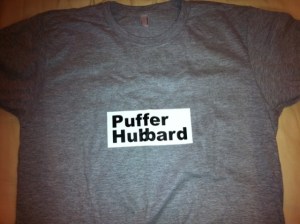
Betta recognize
Neel from Duke was good this year, so now a fresh tee below his tree. (He earned it commenting on my “GWAS” blog post.) This is one of only three that exist in the world right now (the designers of the tee, my friend Calvin and I, are the other two proud owners). It’s a nerdy inside joke around here, a legitimate lab reference we think sounds ambiguously cool and hilarious.
Merry Holidays from YPAA. If you’re cold like I am right now go sip on some egg nogs. Blogs and nogs to warm your insides. 🙂
RNA Journal Club 12/2/10
Reprogramming Cellular Behavior with RNA Controllers Responsive to Endogenous Proteins
Stephanie J. Culler, Kevin G. Hoff and Christina D. Smolke
Science Vol. 330, no. 6008, pp. 1251-1255, 26 November 2010.
DOI: 10.1126/science.1192128
Regulatory RNA Meetings of Note in 2011
New Year’s resolution: don’t get scooped. But enjoy a meeting.
Hit the slopes in Banff, run to the aquarium in Monterey, or just trip out in Austria and Japan.
MicroRNAs and Non-Coding RNAs and Cancer (Keystone Symposia)
Fairmont Banff Springs • Banff, Alberta
February 11 – 16, 2011
Scientific Organizers: Gregory J. Hannon, Curtis C. Harris and Martine F. Roussel
MicroRNAs and Human Disease (Keystone Symposia)
Fairmont Banff Springs • Banff, Alberta
February 11 – 16, 2011
Scientific Organizers: Eric N. Olson, Sakari Kauppinen and Eva van Rooij
ASM Conference on Regulating with RNA in Bacteria
InterContinental San Juan Resort and Casino • San Juan, Puerto Rico
March 7 – 11, 2011
Scientific Organizers: Gisela Storz, Jörg Vogel, Karen Wassarman
Mechanism and Biology of Silencing (Keystone Symposia)
Portola Hotel & Spa • Monterey, California
March 20 – 25, 2011
Scientific Organizers: Elisa Izaurralde, Victor Ambros and V. Narry Kim
Mechanisms of RNA-mediated Regulation (Mosbacher Kolloquium)
Alte Mälzerei • Mosbach/Baden, Germany
April 7 – 9, 2011
Scientific Organizer: Dagmar Klostermeier
6th Microsymposium on Small RNAs
IMBA • Vienna, Austria
May 16 – 18, 2011
Scientific Organizers: Javier Martinez & Julius Brennecke
Nucleic Acids (Gordon Research Conference)
University of New England • Biddeford, Maine
June 5 – 10, 2011
Chairs and Vice Chairs: Christopher D. Lima & Roland Kanaar; Rachel A. Green & Karolin Luger
Kyoto International Conference Center • Kyoto, Japan
June 14 – 19, 2011
Scientific Organizers: Eric Westhof, Yoshikazu Nakamura, Lynne Maquat, Haruhiko Shiomi, Jamie Williamson, Melissa Jurica
Regulatory RNAs (Cell Symposia)
Wyndham Hotel • Chicago, Illinois
October 10 – 12, 2011
Scientific Organizers: Erik Sontheimer, Howard Chang, John Pham, Fabiola Rivas
RNA Journal Club 11/18/10
Crosstalk between mRNA 3′ End Processing and Transcription Initiation
Christophe K. Mapendano, Søren Lykke-Andersen, Jørgen Kjems, Edouard Bertrand, and Torben Heick Jensen
Molecular Cell 40, 410–422, 12 November 2010.
DOI 10.1016/j.molcel.2010.10.012
Ain’t Nuthin’ But A “GWAS” Thang
If you could rename your favorite journals with musically referencing titles, what would they be? Some ideas:
Cell or Nature or Science = Magical Mystery Science Tour
Nature Genetics = Nuthin’ But A “GWAS” Thang
Genes and Development = Billie Genes
PLoS One = Come As You Are
PLoS Biology = Wish You Could Publish Here
Genome Research = C.B.R.E.A.M. (Computational Biology Rules Everything Around Me)
CSHL Protocols = Methods Man
RNA or Nucleic Acids Research = Base Sugar Phosphate Magik
Any others? Hey, first person to submit a comment below identifying all of my references and adding one good new one gets a free super-limited edition t-shirt. For reals!
Europeome
The Non-Coding Genome meeting held at EMBL in Heidelberg this past October was great. To me, this “European Keystone” bettered the two (American) Keystones I’ve attended (’08 and ’09), with more breadth, including prokaryotic regulatory RNAs and lincRNAs. NCG also ran a more functional schedule, with the full day comfortably broken up with ample coffee/tea and meal breaks. The food was also ten-times better, and the venue was nifty in the building interior boasting a true double-helical walkway. Neat. This year’s organizers mentioned they plan for NCG to continue bi-annually, so look out for it in twenty-twelve.
After Heidelberg I hurried down to Stuttgart to get my car fix at the impressive museums of Porsche and Mercedes-Benz (highly recommended even if you have only a casual appreciation for German autos). Next, in a blur of French countryside, I was whisked to Paris, where everything was lovely. Everything. The art, architecture, churches, food, parks, the ladies. I spent my visit there with a friend, former labmate, and esteemed blog contributor (Robin!) who just started a Postdoc in Paris at the Pasteur. To those with true visual and gustatory aesthetics, Paris will make you weak in the knees.
Sometimes good things happen to Ph.D. students!
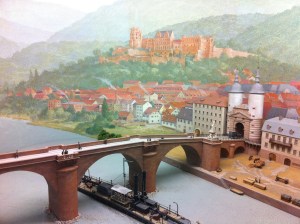
Heidelberg, Germany

You know those helixes that are, like, double helixes?

Porsche Museum, Stuttgart, Germany

View from Eiffel Tower

Crepe making in Paris

Paris skyline as seen from Centre Pompidou
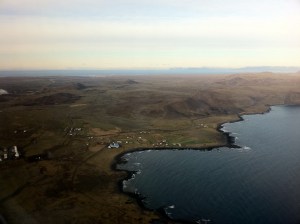
Stopping over in Iceland
Heading home
RNA Journal Club 11/4/10
Maternal mRNA deadenylation and decay by the piRNA pathway in the early Drosophila embryo
Christel Rouget, Catherine Papin, Anthony Boureux, Anne-Cécile Meunier, Bénédicte Franco, Nicolas Robine, Eric C. Lai, Alain Pelisson & Martine Simonelig
Nature 467, 1128-1132, 28 October 2010.
doi:10.1038/nature09465

 You'd Prefer An Argonaute
leave a comment